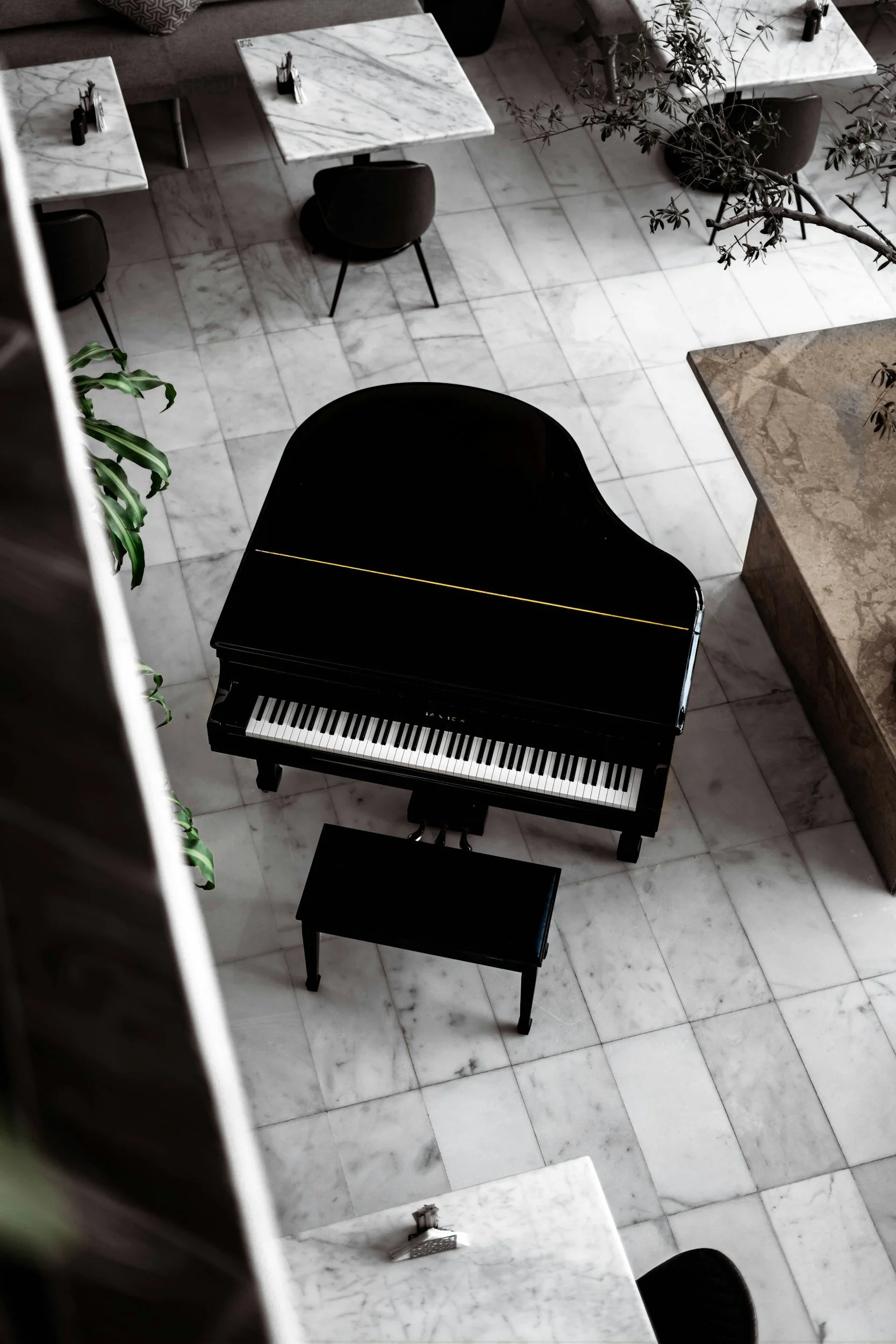
How Do I Care for My Piano?
The Owner’s Guide to Piano Care
How often should I tune my piano?
2x yearly

Generally speaking, most pianos are recommended to be tuned twice a year, at least once to preserve your instrument’s integrity. However, if your piano is exposed to humidity or temperature fluctuations, this could cause your piano to need more tunings throughout the year. Certain manufacturers may also recommend more tunings in the first year of buying a new piano, as the strings will stretch the most during this first year of use.
Why do pianos go out of tune?

Temperature & Humidity
As temperature and humidity rise, the wooden parts of the piano expands. This increases tension on the strings, causing them to go sharp. Conversely, when temperature and humidity fall, the soundboard contracts. This lessens the string tension, causing them to go flat. Tuning twive a year allows us to correct for these seasonal changes and keep your piano in tune.
For the same reasons, we also recommend placing your piano on an interior wall of your home. This helps shield it from direct sunlight, heating vents, air conditioners, and drafts. All of which can cause damaging temperature and humidity swings.

How can I clean my piano?
To disinfect your piano, the keys are the most important area to address. Use a gentle cleaner, one that does not contain bleach, as this is safe for the keys. Apply the cleaning solution to a soft towel first, then gently wipe each key, rubbing until clean.
For the exterior, you can maintain its shine with a lightly damp microfiber cloth. High-polish models may be dusted with a dry microfiber or a dedicated polishing cloth. While piano polishes are available, we always recommend spot-testing a small, inconspicuous area before full application.

Frequently Asked Questions
-
Concert pitch (A440) is the standard tuning reference that all instruments use to play in tune together. It defines the exact sound/frequency for each note. When you press the A key above middle C, that sound should vibrate at exactly 440 cycles per second. When your piano is professionally tuned, the technician aligns all its strings to this precise standard, ensuring it sounds correct both on its own and in harmony with any other instrument tuned to the same reference.
-
Upright pianos are measured vertically from the floor to the lid. Spinet/Console pianos measure between 39-45”. Studio pianos measure between 45-48”. Anything taller is considered a full size upright piano.
Grand pianos are measured horizontally from the front keys to the back edge of the pianos lid. Baby Grand pianos are between 4’9”-5’6” in length. Parlor Grand pianos are between 5’9”-6’1” Ballroom Grand pianos are between 6’2”-7’. Concert Grand pianos are a maximum of ~9’ long.
-
A pitch raise is a special tuning process for pianos that have fallen significantly flat. A standard tuning won't work in this case, simply tightening the strings to the correct pitch would cause them to slip and go flat again before the tuning is finished. Instead, the technician first deliberately overshoots the target pitch for each string, then returns for a second, fine-tuning pass. This two step process allows the piano's structure and strings to settle back into long-term stability at the correct concert pitch.
-
Piano action regulation is the meticulous adjustment of the moving parts inside your piano—the keys, hammers, dampers, and levers—to restore their alignment and timing. Over years of playing, wear and compression of felt and wood cause the mechanism to become sluggish, uneven, or unresponsive. Regulation ensures every key has a consistent touch weight, depth, and responsiveness. This process doesn't change the sound itself but is essential for giving you maximum control over dynamics, repetition speed, and overall playability.
-
Piano voicing (or tone regulation) is the process of adjusting the quality and character of your piano’s sound, without changing its pitch. This is done by reshaping or needling the hammer felts to alter their density, which changes how they strike the strings. Voicing can make a piano sound brighter or mellower, more powerful or more intimate, and helps achieve an even, balanced tone across all 88 keys.
-
A piano is difficult to tune because it is a complex physical system. Unlike instruments with one string per note, a piano has up to three strings per note that must be tuned in perfect unison. The strings are made of stiff steel wire, which causes subtle imperfections in their vibration called "inharmonicity." To compensate, the tuner must slightly stretch the octaves in a precise, non-linear pattern (called a "temperament") so the entire piano sounds harmonious across its 88-note range. Achieving this stable, balanced result requires a highly trained ear, specialized tools, and a delicate touch for adjusting each tuning pin under hundreds of pounds of string tension.